
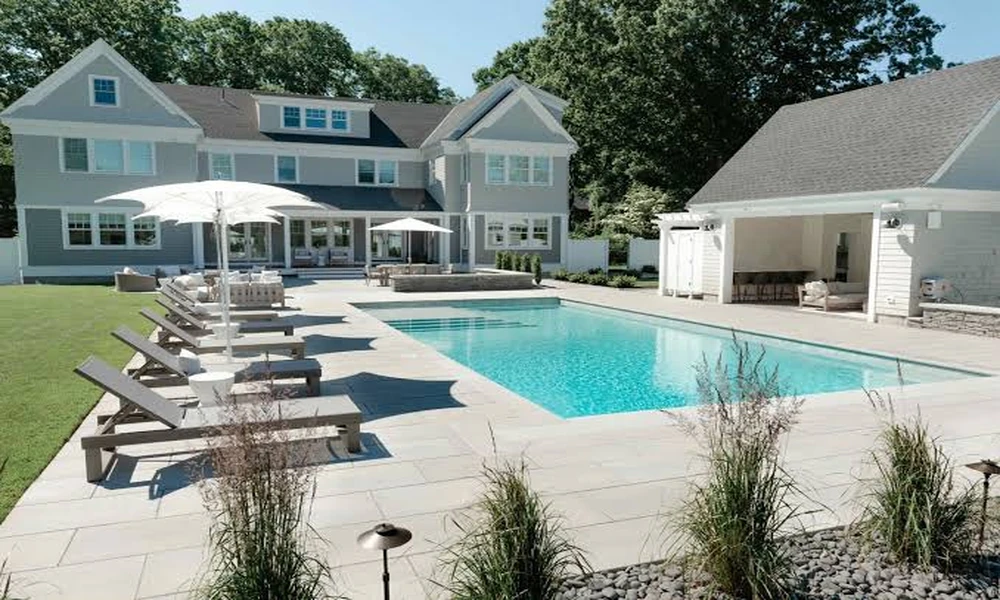
Two pool budgets are only comparable when they describe substantially the same finished project. One figure may cover the pool itself, while another includes patio work, access restoration and several selected features. Before deciding which proposal represents better value, establish what each number buys and which decisions or responsibilities remain outside it.
Name the finish line each number buys
Ask each contractor to describe the condition of the backyard at the end of the quoted work. The answer should be understandable without specialist knowledge. Will the intended patio be finished? Which existing surfaces will be restored? What will still require another contractor? This turns an abstract total into a physical result the household can compare.
A scope comparison might reveal several different kinds of omission:
- A feature shown on the concept drawing has not been selected or priced.
- A separate trade’s work is required but is outside the builder’s quoted scope.
- An existing lawn or fence affected by construction has no agreed restoration finish.
- A cost is provisional because site information still needs to be confirmed.
These situations should not all be treated as a contractor forgetting something. A deliberate exclusion may be entirely appropriate if another party has accepted responsibility. A provisional item may reflect an honest uncertainty. The purchasing problem arises when the homeowner reads every blank as though the result were already included in the total.
Use the same project drawing when discussing the proposals. A quotation prepared for an earlier pool position or smaller patio does not describe a later revision merely because both carry the same household name. Record which drawing and selections each proposal references. That is the foundation for a meaningful comparison of the figures.
Translate allowances into pending decisions
An allowance should lead to a conversation about what remains to be chosen and how the final amount will be established. Ask what the figure assumes, what could change it and when the decision is needed. The exact contract language matters, so seek an explanation from the contractor for the terms used in that proposal.
Material selection is a straightforward example. A homeowner may picture one kind of patio finish while the initial budget assumes another. Bring the proposed sample or product identification into the discussion and ask for the resulting scope and price to be documented. Describing both as stone does not establish that the same material or installation has been priced.
Separate selection uncertainty from site uncertainty. The household can choose a finish, but a contractor may need further information before resolving another cost. Ask which unknowns can be addressed before commitment and which remain subject to the agreed contract process. This gives the owner a better understanding of exposure without pretending that every construction variable can be eliminated.
Keep optional features visible as choices. An attractive initial design can gradually turn every option into something that feels indispensable. Identify what the household requested, what was suggested and what is necessary for the project as designed. That discussion should happen with the professionals before optional items are removed in ways that disrupt connected work. Equipment descriptions also deserve specificity: compare the identified models and included functions with professional guidance, rather than assuming two lines labelled automation or lighting contain the same package.
Follow construction beyond the water’s edge
The route into the backyard can affect the project even though it will not appear in the finished pool photograph. Discuss protection, approved removals and reinstatement of affected areas. Ask where those tasks appear in the proposal and who will coordinate them. A comparison that ignores access may overlook work the property needs regardless of the pool finish selected.
For an example of the categories involved, read the project budget breakdown published by Jameson Pool & Spa. It separates the pool from several associated project items and discusses construction considerations. Use those categories to inform the conversation, while obtaining a current site-specific proposal rather than treating a published example as a quote for your property.
Associated work should be assessed by the appropriate professionals. Gas and electrical connections, approvals and site preparation are not interchangeable accessories that the owner can simply remove to reach a preferred total. Establish the required scope and the responsible parties, then compare the proposals on that basis. Technical requirements should come from the project assessment.
Also identify what happens after the visibly dramatic construction work ends. Owner instruction, outstanding finishing work and documentation can affect the handover. Ask what the contractor’s completion process includes. A project that looks nearly finished from the kitchen window may still have agreed tasks to complete before the household treats it as ready for ordinary use.
Reduce scope with a drawing beside the figures
If the complete project exceeds the household’s intended budget, review physical changes with the designer. A smaller patio area, different finish or postponed decorative feature may each have a different effect on daily use and future work. Discuss those effects rather than cutting a percentage from every line and hoping the same backyard can still be built.
Ask whether any deferred item would require completed work to be disturbed later. A staged choice is more useful when the future task has been considered now. Request an updated scope after the discussion so the revised total does not remain attached to a drawing that still promises the earlier result.
Walk through the imagined finished yard once for each proposal, from the entry route to the seating area and back to the house. Name anything unfinished, provisional or assigned elsewhere. When both proposals describe that same walk clearly, their price difference becomes something the household can assess with far more confidence.

Comments are closed.