
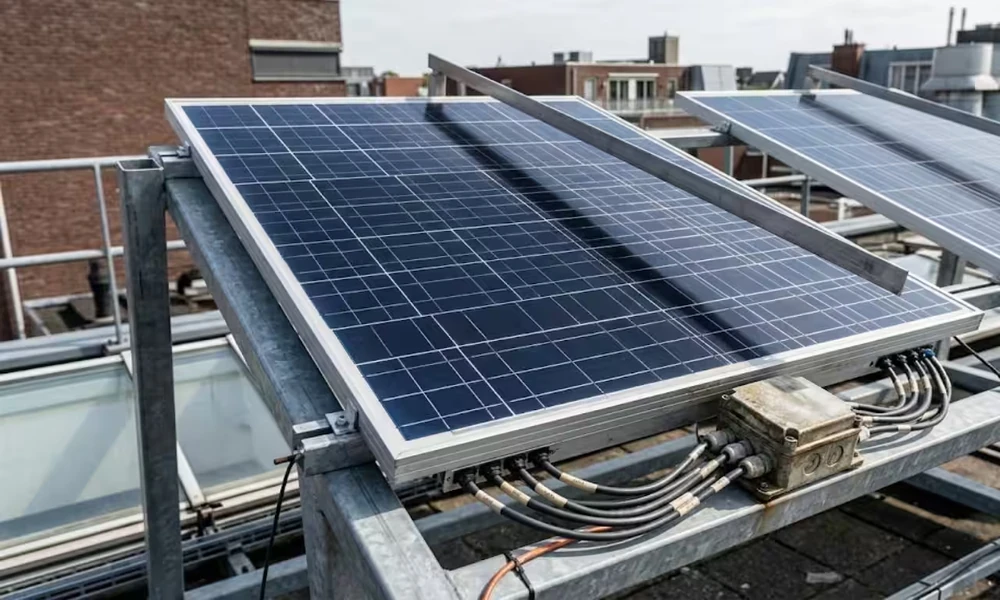
Picture a homeowner outside Lawton who put up twenty solar panels six years ago, on shingles that were already twelve years old. A spring storm drops golf ball hail across the neighborhood. The adjuster walks the roof and says the shingles are done. Then he looks at the array bolted on top and asks the question nobody brought up when the panels went in. What happens to all of that while the roof gets replaced?
That conversation is becoming common across southwest Oklahoma and North Texas. Out there, sunshine makes solar appealing and hail makes roofs short-lived. Solar panels usually come with performance warranties of 25 years or more. Asphalt shingles in hail country seldom last that long, so the two layers end up on different schedules, and sooner or later the roof under the array needs work.
Contractors who deal with both layers see the overlap all the time. Based in Elgin, Liberty Roofing, LLC is a veteran-owned, GAF-certified team with two decades in the trade. It handles solar panel detach and reattach as part of reroofing jobs from Lawton and Cache to Wichita Falls, often while helping the homeowner work through the insurance claim.
Shingles Beneath Glass Live a Strange Life
The section of roof under an array does not age like the open slopes around it. Panels block a lot of ultraviolet light, so the shingles directly underneath often look newer than the rest. That shade has a cost. Leaves, pine needles and windblown grit collect in the gap between the modules and the roof surface. Birds and squirrels like the sheltered space too, and their nests hold moisture against the granules for weeks at a time.
Water also behaves differently around an array. Rain that hits the glass sheets off the lower edge in a concentrated line instead of spreading across the slope. Over the years, that repeated stream can wear a visible path in the shingles below the panels.
Then there are the penetrations. Each mounting foot is usually lagged into a rafter through the shingles, with a flashing or sealed base meant to keep water out. A typical residential array can have forty or more of these points. The sealants age, the shingles around them expand and contract through Oklahoma summers and winters, and a weak flashing can leak for a long time before anyone notices a stain on a ceiling.
When Hail Lands on Both Layers
Panels are tougher than many people expect. Modules sold for homes are tested by firing ice balls at the glass, usually about an inch across and moving at highway speed. That rating covers a lot of ordinary storms. The bigger stones that sometimes come through Comanche County and the Red River corridor are another matter, and the shingles around the array tend to take the damage first.
Researchers at the Insurance Institute for Business and Home Safety test roofing materials and photovoltaic panels side by side in a dedicated hail lab, partly to understand how roof age changes the outcome. Their work points to something adjusters see in the field. An older shingle roof loses impact resistance year by year, while the glass above it holds steadier.
That matters a great deal for the claim. When the roof is approved for replacement, the estimate should include removing and resetting the solar system as its own line item. If it is left off, the homeowner can end up paying for it out of pocket. A few other insurance details are worth sorting out early:
- Panels the homeowner owns are generally covered as part of the dwelling, so damaged modules can sometimes be replaced within the same claim.
- With leased or financed systems, the leasing company may insist that its own technicians do the removal, which can change scheduling and cost.
- Photos of the array taken before the storm, with dates, help a lot if anyone later argues about whether a cracked panel came from hail or from handling.
How a Detach and Reset Actually Unfolds
On a well-run project, removing and reinstalling the system follows a deliberate order. The broad steps look something like this.
- The crew records the system’s current output and photographs the layout, wiring paths and serial numbers before touching anything.
- The system is shut down at the inverter and the disconnects, so no live current is running through the modules during handling.
- Panels come down one at a time, get labeled to match their original positions, and are stored flat on padding in a garage or secured trailer.
- Racking rails and mounting feet are removed, which exposes every old penetration for inspection.
- The roof is torn off and replaced, with damaged decking repaired and new flashings set at the mount locations.
- The array goes back up, gets reconnected and tested, and its output is compared against the baseline recorded at the start.
The whole process typically leaves the system offline for several days to a couple of weeks, depending on roof size and weather. Many towns treat the reinstall as electrical work that needs a permit and inspection, and some utilities want notice before the system feeds power back to the grid. That paperwork can add more time than the physical work.
Warranties Pull in Opposite Directions
Warranties cause more friction on these jobs than almost anything else. Solar installers often warn that their workmanship coverage may not survive someone else handling the equipment. Shingle manufacturers, meanwhile, have their own rules about penetrations and flashing methods, and an array mounted carelessly can affect roof coverage. Homeowners caught in the middle should ask both parties in writing what will keep each warranty intact before work begins.
The hardware brings its own issues. Systems with microinverters behind each panel need gentler handling than string inverter setups. Older arrays may use racking that has been discontinued, which makes it hard to source replacement clamps or feet. If one panel cracks during removal, finding an exact match for a module made eight years ago can be difficult. A slightly different replacement can still work, but it may change how the string performs.
Lining Up the Clocks Before the Next Storm
The cleanest way to avoid all this is planning ahead. Anyone thinking about solar on a roof older than ten or twelve years usually comes out ahead by replacing the shingles first, so both layers start on the same schedule. Doing it in that order saves the cost of a detach and reset later, which is often billed per panel and can add up to a few thousand dollars on a modest array.
The new roof itself is also worth thinking about. Impact-rated Class 4 shingles hold up better in hail-prone areas, and many insurers offer premium credits for them. Under a solar array, that toughness protects an area that is hard to inspect and expensive to reach. Fall and early winter are usually easier months to schedule the work, after the summer heat and before the spring storms that keep crews busy from March into June.
A house with solar has two systems on the roof that are expected to last different lengths of time. Homeowners who know that ahead of time can plan the claim, the order of work and the warranties when the next hailstorm comes through.

Comments are closed.