
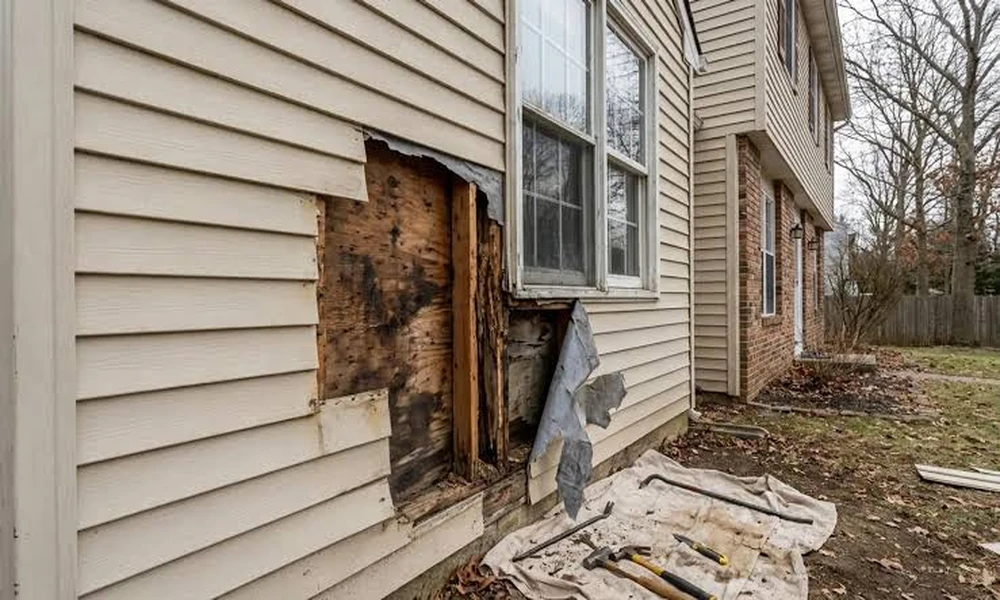
Push a screwdriver into the lowest board on the shady side of an older house and there is a fair chance it sinks in like it is going into cake. Most homeowners blame the siding when that happens. Usually the siding is the victim. Something above it, beside it or below it has been feeding it water for years.
Siding in the Augusta area has a hard job. Summers bring long stretches of humidity and pop up storms, winters bring cold rain that lingers, and tropical systems occasionally rake through with wind strong enough to peel panels off whole walls. Through all of that, a wall only stays healthy if water that gets behind the cladding has a way out and water outside it never gets a reason to come in.
That is why a first walk around the house with an Augusta siding contractor tends to involve more looking up at the roofline and down at the soil than staring at the boards in between. A locally owned team that also handles roofs and gutters across Evans, Grovetown and Martinez sees how those systems pass water to one another, and the honest answer is sometimes a smaller fix than the homeowner braced for.
Trouble That Drips Down From the Roofline
The single most common rot spot on a sided house sits right below the point where a lower roof edge runs into a wall, the kind of spot you find beside a garage roof or a porch roof tucked against a two story wall. Water running down that roof edge needs a small bent piece of metal called kickout flashing to throw it out into the gutter. Without one, the water slides straight behind the siding at the end of the roof and soaks the sheathing below. The outside can look perfectly fine while the wall inside turns to mush.
Gutters cause the next round of damage. When they clog or sag, water spills over the back edge and runs down the face of the wall. Downspouts that dump right at the foundation splash back onto the lowest courses after every storm. Dark stains in a vertical stripe below a gutter seam are an easy tell.
The Middle of the Wall Where Holes Live
Every opening cut through a wall is a place water can get in. Windows and doors are the big ones. Caulk at window edges is only a backup. The real protection is flashing tape and metal at the head of the window and a sill that sends water outward. On houses where installers skipped those steps, rot often shows up as soft spots at the lower corners of window frames and in the boards just beneath them.
Smaller holes add up too. Hose bibs, dryer vents, light fixtures, outdoor outlets and the lines that run to an air conditioner each need a proper mounting block and seal. Dryer vents are especially sneaky, because they push warm, damp air and lint against the wall several times a week. Lawn sprinklers aimed a little too close can do as much damage as a leaky window, soaking the same strip of siding every morning all summer.
Vinyl siding faces one odd local hazard worth knowing about. Energy efficient windows on a neighboring house can bounce concentrated sunlight onto a wall, and on a hot afternoon that reflection can warp or ripple vinyl panels. It looks like a manufacturing flaw, but the cause is usually across the property line.
The Bottom Six Inches Decide a Lot
Ground level is where Georgia’s red clay, mulch beds and termites all meet the house. Rain splashes clay up onto the lowest courses, staining them and keeping them damp. Mulch piled against the wall acts like a wick. Wood siding and trim generally need to sit at least six inches above the soil, and fiber cement makers set similar clearances in their installation instructions.
That gap also matters for termites. Subterranean termites need moisture and contact with soil, so wood that touches the ground gives them an easy, hidden route into the walls. The EPA’s guide to identifying and controlling termites lists probing exposed wood for hollow spots and watching for swarms among the simplest ways to catch them. Mud tubes climbing the foundation behind shrubs are another sign worth a closer look.
A quick check along the base of the house only takes a few minutes and can be done with a flathead screwdriver.
- Press gently into the bottom two courses on every wall, paying extra attention to shaded sides.
- Probe the corners beneath each window and below any roof edge that meets a wall.
- Check behind downspouts, around hose bibs and next to dryer vents.
- Look for swollen board edges, bubbling paint, gaps at the seams and dried mud trails.
Matching the Material to the Stress It Will Face
Many houses built around Augusta in the 1980s and 1990s were wrapped in hardboard siding, a pressed wood fiber product that swells badly once water reaches its edges. If a house has it and the bottom edges are flaring or mushrooming, patching usually just buys time.
Vinyl remains the budget choice. It does not rot, but it is not waterproof either, so it depends heavily on the house wrap and flashing behind it. In high winds, quality vinyl with a strong nailing hem holds up far better than thin panels, a lesson many CSRA homeowners learned after Hurricane Helene stripped siding from walls across the area.
Fiber cement resists rot, fire and termites and holds paint well, though it is heavy, needs careful cutting and must keep its clearance from soil and roofs. Engineered wood is lighter, comes treated against fungal decay and insects, and handles impact well, but its cut ends need sealing and it cannot sit in standing water. Whatever the choice, the barrier behind the cladding and the flashing around every opening matter at least as much as the face material.
Fixing the Cause Before the Cladding
Small, isolated damage can often be handled by cutting out a few boards, replacing any wet sheathing, adding the missing flashing and blending the new pieces in. Matching an older profile or color can be the tricky part, especially with discontinued vinyl, so it helps to keep a few spare pieces after any project.
Widespread rot across a wall, swelling hardboard or repeated wind damage usually points toward replacement. In that case, the removal stage is the moment of truth. Once old siding comes off, the sheathing, framing and window flashing are all visible, and that is when hidden water damage gets fixed for good. New cladding installed over a wall that still has a roofline leak, a dumping downspout or soil piled against it will fail the same way the old cladding did, only a little later and at a much higher cost. Getting water to leave the house the right way is what lets any siding last.

Comments are closed.