
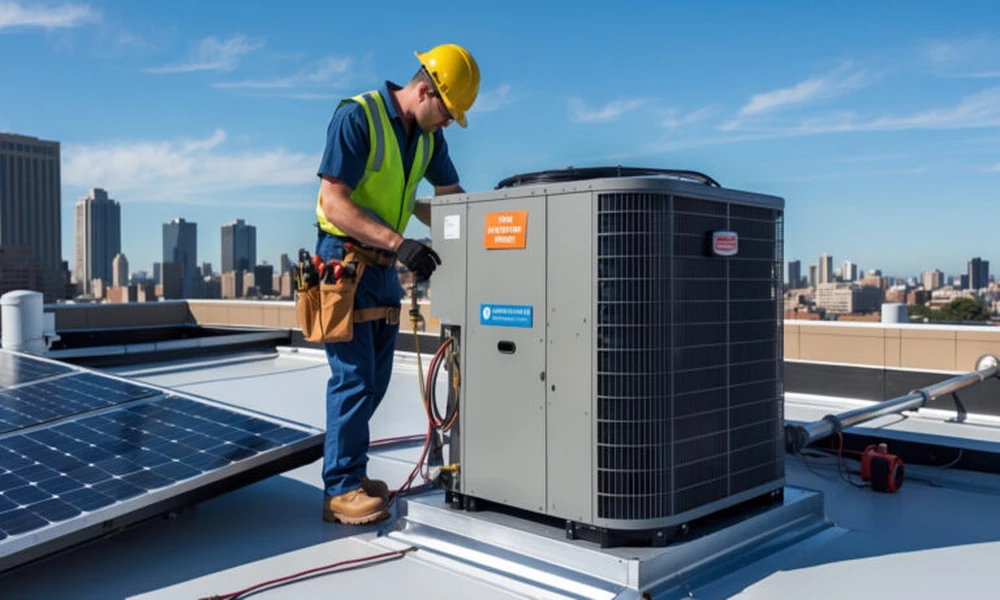
A broken air conditioner makes a home uncomfortable, but a refrigeration failure can interrupt business operations and threaten temperature sensitive inventory. Both involve mechanical cooling, yet their maintenance priorities, operating demands, and consequences are considerably different.
In Carrollton, Texas, long periods of summer heat place substantial demands on residential cooling equipment, commercial climate control systems, and refrigeration units. HVACR stands for heating, ventilation, air conditioning, and refrigeration. Understanding how each system serves its property helps owners recognize critical failures and establish appropriate maintenance routines.
For Commercial HVAC and Refrigeration, Travis HVAC provides services addressing business climate control and cooling requirements. Its listed capabilities also include Central Air Conditioning Repair and Furnace and Heating System Repair or Maintenance. Property owners seeking hvac services in Carrollton can visit the company website to request service.
Single Family Homes Depend on Seasonal Heating and Cooling
Residential heating and cooling systems primarily protect occupant comfort and maintain reasonable indoor temperature and humidity conditions. In Carrollton’s established neighborhoods and newer residential developments, equipment performance depends on correct sizing, operating condition, and building characteristics.
Cooling load: The amount of heat an air conditioner must remove to maintain the desired indoor temperature. North Texas homes experience substantial solar heat gain during summer. Windows, insulation, building orientation, and internal heat sources influence the cooling load. Equipment that is incorrectly sized may struggle to maintain comfort or operate inefficiently.
System cycling: The repeated starting and stopping of heating or cooling equipment as the thermostat calls for temperature adjustments. Frequent short cycling may indicate control problems, airflow restrictions, equipment oversizing, or other mechanical faults. These cycles can increase component wear and reduce humidity removal during cooling.
Refrigerant charge: The amount of refrigerant circulating inside an air conditioning system. An incorrect charge can impair cooling capacity and efficiency. Low refrigerant may indicate leakage, which requires diagnosis rather than repeated additions.
Failures with the greatest consequences: Cooling problems during extended summer heat deserve prompt attention, particularly where occupants are vulnerable to high indoor temperatures. Heating problems also matter during occasional North Texas winter freezes.
Suitable maintenance:
Inspect heating and cooling equipment before peak seasonal demand.
Check electrical connections, controls, filters, and condensate drainage.
Investigate unusual cycling, refrigerant leaks, and declining performance before they become major failures.
Small Businesses Need Predictable Indoor Conditions
Offices, salons, neighborhood shops, and professional service spaces depend on climate control for staff comfort, customer experience, and normal operations. Their equipment may operate for extended business hours and respond to fluctuating occupancy.
Occupancy load: Heat and ventilation demand created by people, lighting, electronics, and business activities. A small office filled with employees and computers has different cooling requirements from a lightly occupied retail space. Changes in layout or business use can alter the original load assumptions.
Control scheduling: The programmed operation of heating and cooling systems according to occupied and unoccupied periods. Poor scheduling can waste energy or leave indoor spaces uncomfortable when employees arrive. Extended setbacks also need to account for humidity and the time required to restore comfortable conditions.
Preventive maintenance: Planned inspections and servicing performed before an obvious malfunction develops. For businesses, identifying deteriorating electrical components, control faults, or declining cooling performance before opening hours can reduce disruption.
Failures with the greatest consequences: An unexpected cooling failure can affect employees, customers, appointments, and normal business operations. Even when no inventory is at risk, uncomfortable conditions can interfere with productivity.
Suitable maintenance:
Review thermostat programming when operating hours change.
Inspect equipment before periods of prolonged summer demand.
Maintain service records and address repeated faults instead of relying on temporary resets.
Texas regulates this work through the Texas Department of Licensing and Regulation’s air conditioning and refrigeration contractor program, which requires applicable contractor licensing for regulated installation, repair, and maintenance activities.
Larger Commercial Buildings Require Coordinated System Management
Larger office buildings, multi tenant facilities, and commercial properties often have more complicated heating and cooling requirements than single family homes. Equipment may serve different zones, operate under centralized controls, or require maintenance coordination across several occupied spaces.
System zoning: Dividing a building into separate areas with individual temperature control requirements. A conference room with intermittent high occupancy may need different conditioning from administrative offices. Poorly coordinated zoning can produce temperature complaints and unnecessary equipment operation.
Capacity management: Matching equipment output to changing demand throughout the building. Part load operation is important because commercial buildings rarely experience maximum occupancy and heat gain continuously. Correct control operation helps maintain comfort without excessive cycling.
Operational continuity: Keeping essential building functions available during inspections, repairs, or equipment failures. Commercial maintenance may require scheduled access, coordination with tenants, and careful planning to minimize interruptions.
Failures with the greatest consequences: A control malfunction or major equipment failure can affect multiple occupied areas simultaneously. Problems involving shared equipment may cause greater disruption than an isolated room complaint.
Suitable maintenance:
Maintain an equipment inventory and documented inspection schedule.
Review controls, electrical components, and cooling performance regularly.
Plan major service activities around business occupancy and building access requirements.
Refrigeration Dependent Businesses Have Different Priorities
Commercial refrigeration differs from comfort cooling because its primary purpose is maintaining controlled temperatures for products, ingredients, or operational processes. A failure may affect inventory even when surrounding indoor conditions remain comfortable.
Temperature stability: Maintaining the required storage or operating temperature despite changing ambient conditions and equipment use. During Carrollton’s hot summers, refrigeration equipment may experience increased heat rejection demands. Dirty condenser surfaces, inadequate surrounding ventilation, or malfunctioning controls can compromise performance.
Refrigerant management: Maintaining the correct refrigerant condition and charge while detecting and correcting leaks. The EPA Section 608 technician certification requirements apply to technicians servicing covered stationary refrigeration and air conditioning equipment. Certification requirements help ensure refrigerants are handled by appropriately qualified personnel.
Defrost management: Controlling frost accumulation where applicable so evaporator surfaces continue transferring heat effectively. Faulty defrost controls can reduce cooling performance, although the relevance of this issue depends on the refrigeration equipment design.
Preventive maintenance: Scheduled examination of temperature controls, heat exchange surfaces, electrical components, and operating performance. Businesses should also maintain independent product temperature monitoring and appropriate response procedures when temperature sensitive inventory is involved.
Failures with the greatest consequences: Refrigeration downtime can threaten product quality, food safety where applicable, and business continuity. Restoring equipment operation does not automatically establish that affected inventory remains suitable for use.
Suitable maintenance:
Record operating temperatures and investigate unexplained variations.
Keep heat exchange surfaces and accessible equipment areas clean.
Arrange professional evaluation of refrigerant leaks, control failures, and recurring temperature problems.
Maintenance Priorities Should Follow Property Risk
Different systems require different maintenance priorities because their failure consequences vary.
Residential priority: Maintain safe indoor conditions and reliable seasonal performance.
Small business priority: Protect occupied working hours and avoid unexpected disruption.
Large commercial priority: Coordinate multiple systems, building controls, and scheduled maintenance.
Refrigeration priority: Maintain required temperatures, protect inventory, and respond promptly to cooling interruptions.
Equipment condition, operating demands, and the consequences of failure should determine maintenance frequency rather than applying identical schedules to every property.
Conclusion
Residential heating and cooling, commercial climate control, and refrigeration share fundamental mechanical principles, but they serve different purposes. A home’s system emphasizes comfort, a commercial building requires coordinated environmental control, and refrigeration equipment may directly protect business inventory.
For Carrollton property owners, effective maintenance begins with understanding the system’s role and identifying which failures would cause the greatest disruption. Regular inspections, appropriate controls, professional refrigerant handling, and timely repairs help keep each system dependable during demanding North Texas weather.

Comments are closed.