Interior design for commercial spaces has undergone a profound metamorphosis in recent years, evolving from mere aesthetic arrangement into a sophisticated dialogue between human psychology, brand identity, and architectural possibility. Like medicine—my usual domain of inquiry—commercial design operates at the intersection of science and art, of measurable outcomes and ineffable experience. The spaces where we work, shop, and gather are not neutral containers but rather active participants in our cognitive and emotional lives, influencing everything from productivity to purchasing decisions in ways both subtle and profound.
The Architecture of Decision
Consider the modern retail environment. Each element—from the width of aisles to the temperature of lighting—exists within a carefully orchestrated system designed to guide behaviour. An interior design consultant might explain that reducing cognitive load through thoughtful wayfinding doesn’t merely prevent frustration; it creates the psychological space necessary for desire to flourish.
“In Singapore’s commercial interior design landscape, we’re seeing a shift away from overwhelming stimulation toward what we call ‘decisive minimalism’,” notes Wong Chen Hui, principal designer at a leading Singapore firm. “The goal is to create environments where the mind feels simultaneously at ease and engaged—a delicate neurological balance.”
This balance manifests through:
- Strategic negative space that allows products or services to command focused attention
- Material palettes limited to three primary textures to prevent sensory overload
- Lighting schemes that subtly direct visual pathways through commercial environments
- Acoustic engineering that creates zones of sound without visible barriers
The most successful commercial spaces achieve what neurologists might call “optimal arousal”—stimulating enough to maintain interest while sufficiently calm to enable decision-making. This is not manipulation but rather acknowledgement of our cognitive architecture.
Workplaces as Living Organisms
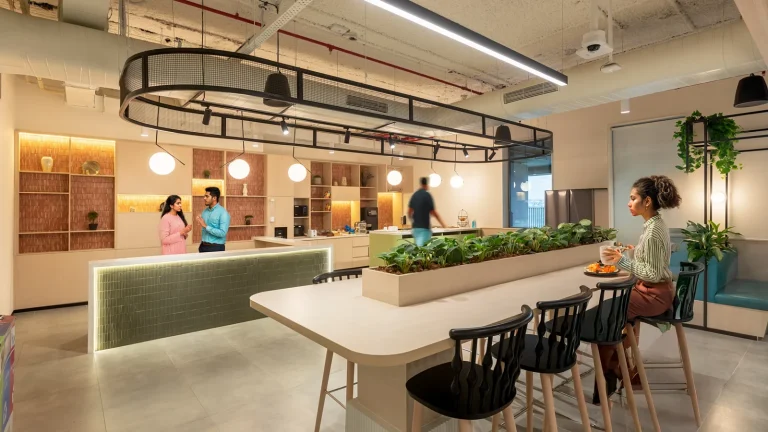
The commercial interior design of workplaces represents perhaps the most rapidly evolving sector of the field. These environments now function less as static containers and more as complex, adaptive organisms responding to changing patterns of work.
“What we’re designing today in Singapore are not offices but ecosystems,” explains Dr. Tan Wei Ming, whose research focuses on workplace psychology. “Commercial spaces must now accommodate not just different tasks but different cognitive modes—deep focus, collaborative thinking, restorative pauses, and social connection.”
The pandemic accelerated our understanding of workplaces as biological systems:
- Ventilation and air quality shifted from technical afterthoughts to central design considerations
- Circadian lighting systems now acknowledge our evolutionary relationship with natural rhythms
- Biophilic elements serve not merely as decoration but as cognitive restoration points
- Flexible boundaries replace fixed walls, allowing spaces to adapt like living tissues
The most thoughtful interior design consultant approaches commercial projects with something akin to a physician’s perspective—understanding that environments, like bodies, contain interconnected systems that must function in harmony.
The Cultural Genome of Space
Commercial spaces carry cultural DNA—inherited patterns of meaning that influence how we interpret and interact with environments. The skilled designer sequences this genome carefully, balancing innovation with recognizable patterns that allow users to navigate both physically and culturally.
In Singapore, commercial interior design often navigates multiple cultural traditions simultaneously:
- Feng shui principles subtly integrated with contemporary space planning
- Colonial architectural elements reimagined through modernist sensibilities
- Traditional craftsmanship techniques applied to technologically advanced materials
- East-West spatial hierarchies harmonised in hybrid arrangements
“What makes Singapore’s commercial design unique is our cultural pluralism,” observes heritage consultant Lim Siew Ling. “Our commercial spaces must speak multiple cultural languages simultaneously without creating cognitive dissonance for users.”
The Ethical Dimensions of Commercial Design
Like medical interventions, commercial design carries ethical responsibilities. The thoughtful interior design consultant recognises that their work shapes human experience in profound ways, necessitating serious consideration of impacts beyond mere aesthetics or function.
The most pressing ethical questions in commercial interior design concern:
- Sustainability—designing for circular material economies rather than extraction and waste
- Inclusivity—ensuring spaces welcome and function for bodies and minds of all types
- Transparency—honestly expressing material qualities rather than simulating precious resources
- Well-being—acknowledging that commercial environments affect physical and mental health
“Commercial spaces are never neutral,” emphasises sustainability specialist Dr. Ng Kai Teng. “Every design decision either regenerates or depletes both environmental and human resources. Singapore’s commercial interior design community is increasingly embracing this responsibility.”
The Future: Adaptive Intelligence
As we move further into this century, the boundary between physical and digital commercial environments continues to blur. The most forward-thinking commercial spaces now function as hybrid entities—physical architectures enhanced by digital layers that respond adaptively to human needs and behaviours.
This evolution requires interior design consultants to collaborate with technologists, data scientists, and experience designers in unprecedented ways. The resulting spaces operate with a form of distributed intelligence—sensing, responding, and learning in ways that static environments cannot.
What remains constant, however, is the fundamental goal: creating commercial environments that honour human dignity while achieving business objectives. Like the practice of medicine—where science meets humanity at moments of vulnerability—the thoughtful orchestration of light, material, and space requires both technical expertise and profound empathy. This delicate balance of art and science, of measurable outcomes and ineffable experiences, remains the essential challenge and promise of commercial interior design.