
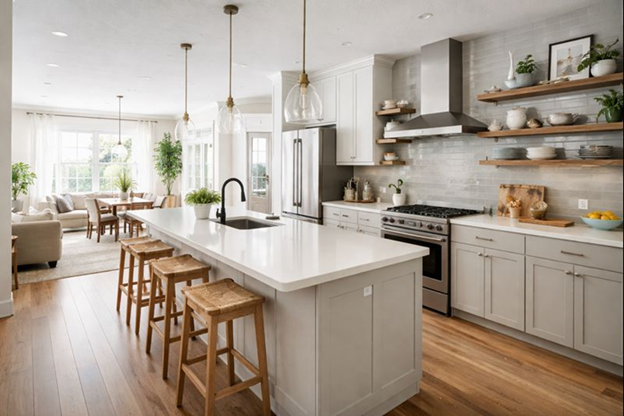
The open layout of many homes now demands that kitchens be designed and built in an aesthetically pleasing manner, while enabling the homeowners to maintain a high level of organisation, and connect seamlessly to other areas of the home such as the dining area or living room. The best way to achieve this design is by employing the L-shape kitchen configuration. The unique layout of this kitchen configuration allows for a balance of functionality with a high degree of flexibility in terms of space. An L-shaped kitchen is highly functional, as it utilises both the existing wall space within the kitchen and all available floor space. The rest of the home can seamlessly flow from the kitchen, and vice versa, due to the fact that this type of layout does not interrupt the rest of the family’s activities.
Benefits of the L-Shaped Kitchen for Open-Concept Houses
- Optimally Utilises all Available Corner and Wall Space
- Creates a Streamlined Kitchen Work-flow
- Increased Interaction with the Living and Dining Areas
- Provides Flexibility for Future Kitchen Improvements (such as the addition of countertop and/or seating) Without Affecting the Flow of Traffic within the Home
Layout Planning for Open-Concept Homes
The way in which the kitchen is laid out, with respect to how it affects the home’s overall appearance, is very important when designing an open-concept home; thus, care should be taken when laying out the elements that will comprise your kitchen. Ideally, the hob and sink should be located on two different wall sections, as this is the most efficient way to create an ideal work-flow within the kitchen. If there are any corners in your kitchen layout, these areas should be taken advantage of by utilizing the appropriate storage devices.
Strategies for Kitchen Planning
Designing an attractive and functional kitchen in an open concept space can be accomplished using multiple planning strategies, which will allow the kitchen and adjoining spaces to flow freely with no interruption. Below is a list of the planning strategies to think about when designing an open-concept kitchen layout:
- Tall cabinets are a great way to create a defined visual line between the kitchen area and the adjoining space.
- Long counters that are continuously available for food preparation ensure that the food-preparation zone remains uninterrupted.
- Ample space should be provided between the cooking zone and food-preparation zone.
- Cooking appliances should be positioned in such a way as to prevent the need to cross paths while preparing food.
- Breakfast counters/peninsulas can add a visual break for the kitchen while also adding informal seating for guests and extra work surface. They can also help to transition the kitchen visually into the other areas of the house without creating an enclosed space.
Open Kitchen Design With Storage Efficiency
To maintain an open and cohesive design for the kitchen, storage must be efficient and strategically placed out of sight. Deep storage drawers, concealed cabinets, and corner pull-outs will keep your cooking supplies in an organized way without creating clutter.
Some common types of storage items in open kitchens are:
- Tall pantry cabinets that are designed to blend in with the layout of the kitchen.
- Deep base drawers above the counter to store cookware and kitchen tools.
- Overhead cabinets that match the height of the kitchen walls.
- Corner cabinets with easy access mechanisms for the contents.
By keeping the countertop clean and organized, the kitchen can naturally flow into the rest of the area.
Selecting Finishes That Provide a Continuous Visual Journey
Finishes play a significant role in establishing an open kitchen design. Light or neutral finishes can create a light and airy environment in the kitchen, while matte finishes will avoid glare. The use of the same type of finishes throughout the kitchen and other furniture will tie the kitchen area visually together.
Royale Touche offers an extensive line of the highest quality laminate products designed to create a consistent and seamless appearance throughout the home’s various areas.
Layered Lighting For Comfort and Definition
Creating an inviting environment in the kitchen and providing ample light for the cooking areas are two key factors in designing a comfortable, safe, and productive kitchen. Layered lighting can provide warmth and comfort throughout the home as well as define and distinguish different areas within the kitchen. Consider the task lighting and warm ambient lighting; the task lighting will illuminate the cooking area and provide an attractive and generous feeling of hospitality. Additionally, consider the use of pendant lights for specific areas such as the countertops; the pendants will create a definition of the kitchen area, while at the same time will not obstruct views from the other areas of the home.
Conclusion
One of the most efficient and functional kitchen layouts is an L-shaped kitchen. An L-shaped kitchen will provide a smooth transition from the kitchen to the other areas of the home. By carefully planning, creating organized storage areas, using consistent finishes, and balancing the locations of the task and ambient lighting, you can create a functional and inviting kitchen.

Comments are closed.